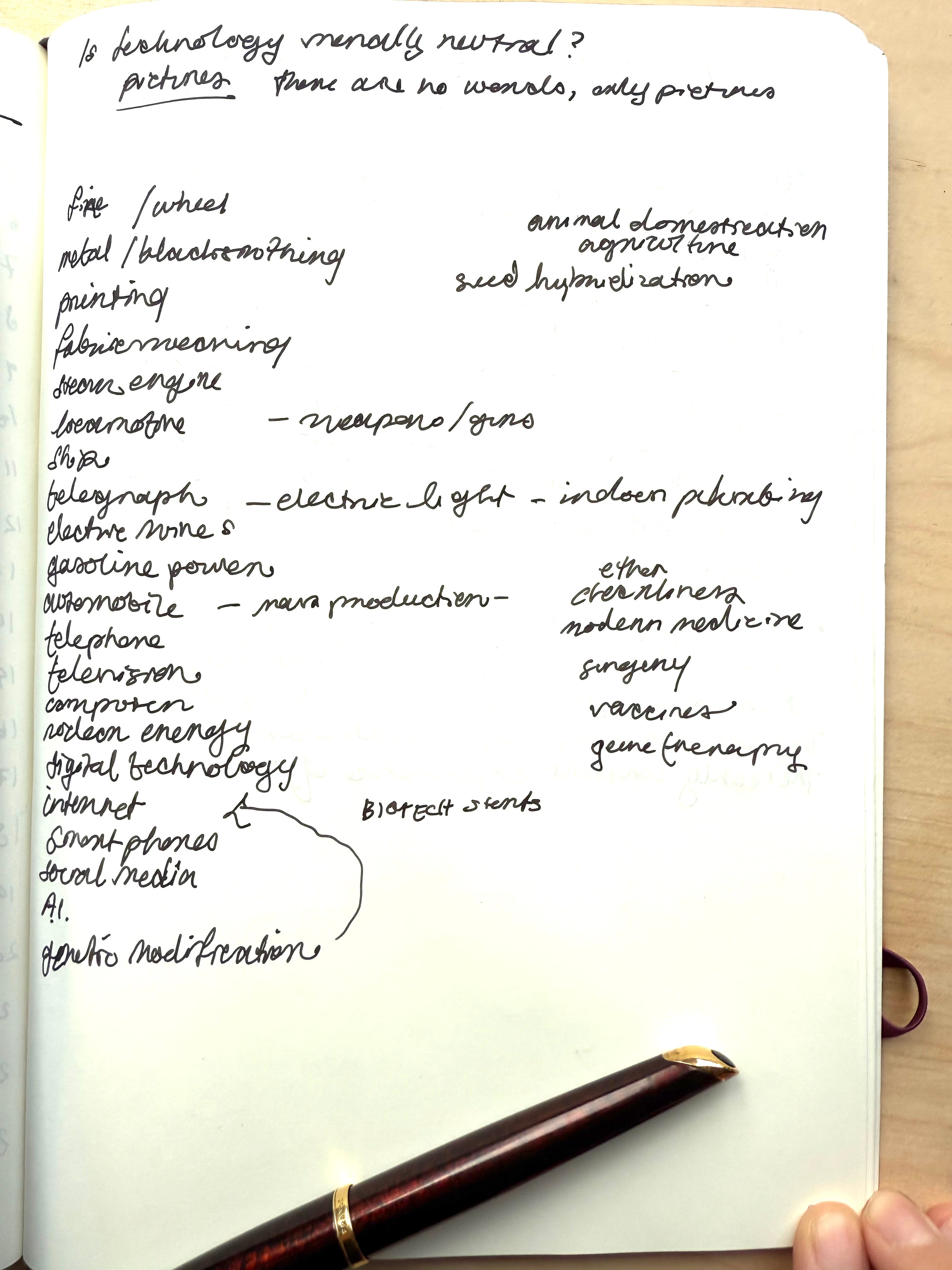
Last week this showed up in my notebook. For a minute I thought I’d make a photo post, gathering pictures from pexels and wikipedia—because I’m visual and like to appreciate things visually. And then I decided against it, because AI can do it so much faster. So why bother?
A friend sent me an essay by Heidegger on a related matter, not exactly moral neutrality but the danger (or not) to the spiritual human being.
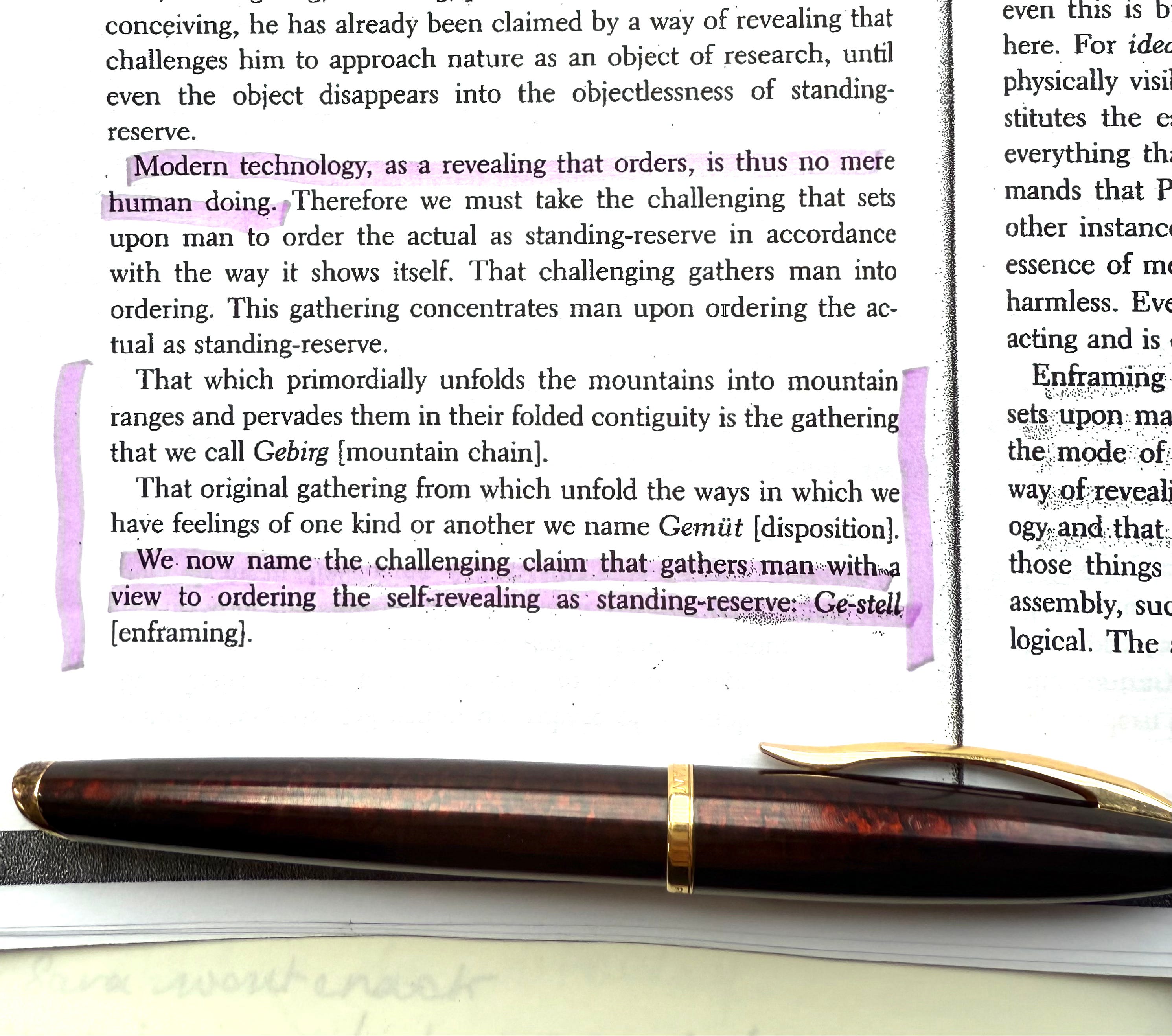
Enframing
Heidegger re-framed the common German word Gestell to describe the phenomena of how technology becomes a trajectory or force that forms its own order and impacts the world through doing so.
Das Gestell (noun), in its conventional use, means “the frame” and gestellen (verb) “to provide, to supply.” When you put the word into image search, you see book display racks and the sort of industrial shelving you might you in a closet or garage. (Image search is a great way to see what a foreign word really means in its common usage.)
He then argues that modern technology turns humanity into a “standing-reserve”—i.e. we are no more than natural resources to be used in the trajectory of modern technology.
To return to my initiating question: does the term “morality” apply to forces and beings other than the human being?
Moral responsibility is only possible with freedom of will. (And this became the justification for reduced sentences for crimes of passion, insanity, incompetence, etc.) Essentially, we have a world where we believe adults should be morally responsible, but recognize that not all are. This is a difficult place to be.
The more you ask questions about the wildly varying levels of moral development among human beings, the more you face the paradox: how is it possible to have a fair, just, and free society when human beings are so incredibly different?
In history, this led to top-down imposed morality (the ten commandments.) Individual human beings had not yet developed a moral sense, and a functioning society required moral rules.
In the present day, some human beings have developed a moral sense, but not all, and among those who have, it differs widely in capacity.
Morality and Technology:
A quote from Steiner about elemental beings (gnomes, sylphs, undines, etc):
They are organised in such a way that they cannot be held responsible in a moral sense. … Many of them are very smart beings—beings which are hardly inferior to man in terms of cleverness and intellect.
Arguably, only highly conscious human beings have taken up their own freedom of will, because doing such requires understanding one’s motivations.
Higher animals (dogs, horses, elephants, etc) display emotion, but it is not reasonable to consider them morally responsible—just as we don’t consider small children morally responsible.
Technology, from a spiritual sense, is made possible through elemental beings. (That is: all of the physical world is made possible through the work of elemental beings; technology is part of the physical world.)
But technology also, of course, incorporates the motivations of people who make it. Many people do not understand their own motivations; they do not understand which forces are whispering into their subconscious. Once you start to listen to that, it can become paralyzing: what is useful to do in this world? How do I discern my own motivations and inspirations?
Heidegger’s argument that modern technology turns the human being into resource makes sense: we’ve moved from sitting and running machines to manufacture goods to pouring our human spirit into the internet, searching for views. (And forming the Eighth Sphere)
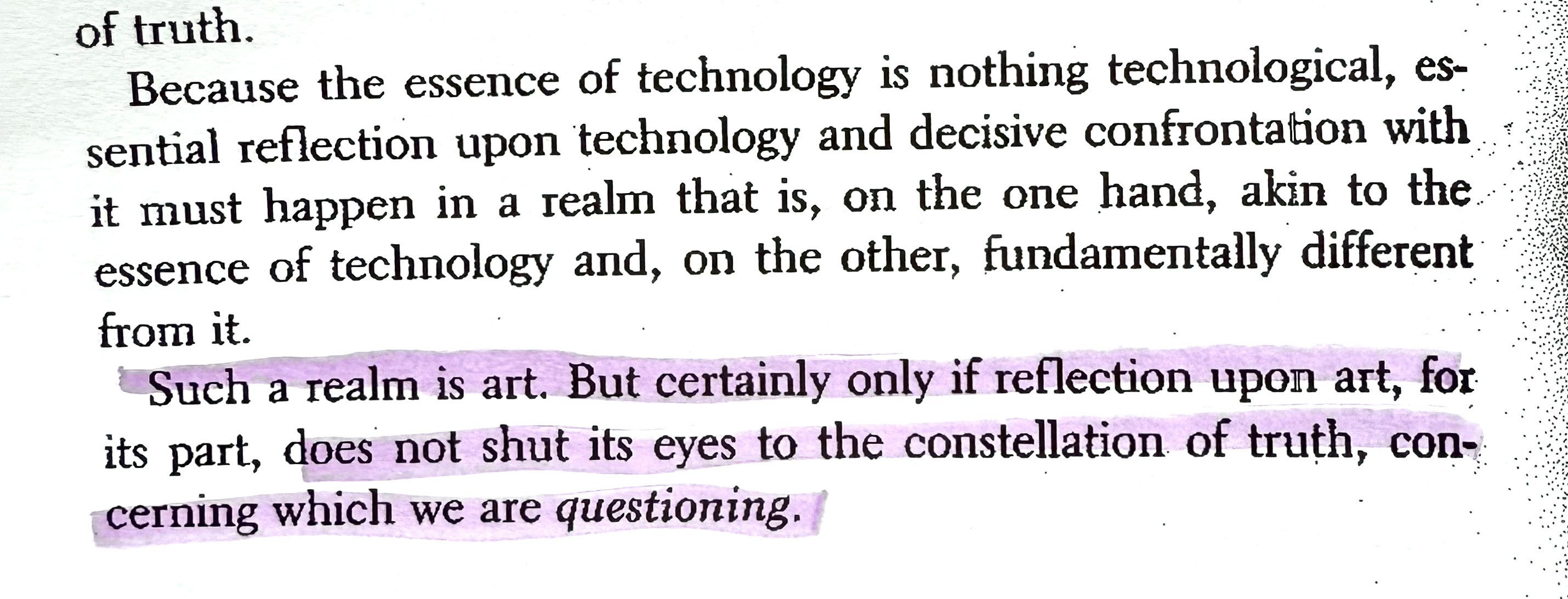
And yet: the solution is somehow to be found in more art. More poetry. More music, literature, creation.
More clips from Heidegger’s essay:
Standing Reserve
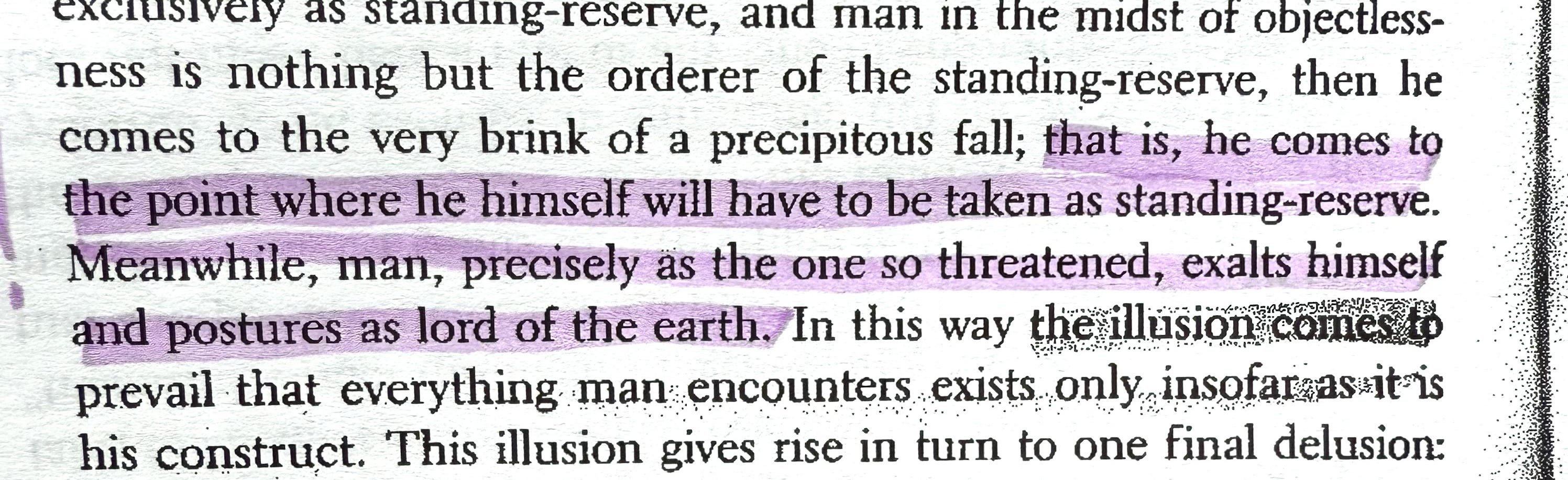
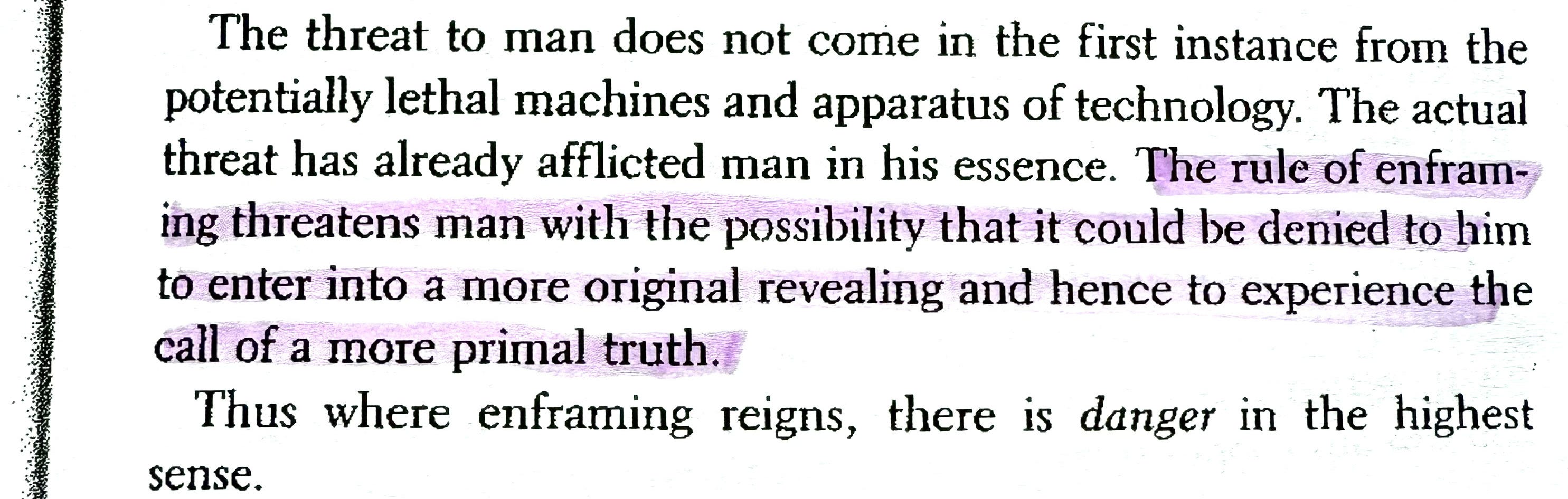
The threat of enframing
And art